The insurance industry is facing an unprecedented retention crisis. Agency owners and operations managers are trapped in an endless cycle of hiring, training, and losing producers. The evidence is clear: traditional insurance agent recruiting methods are demonstrably failing to identify candidates who will actually stay and succeed.
According to a 2025 report by LIMRA, the four-year retention rate for insurance agents has plummeted to an abysmal 9% (InsuranceNewsNet, 2025). Consequently, agencies are burning millions of dollars on generic job boards like Indeed and ZipRecruiter, only to watch their new hires walk out the door within months.
However, the landscape is shifting rapidly. Forward-thinking agencies are abandoning manual processes and adopting artificial intelligence to completely overhaul their talent pipelines. Data shows that integrating AI agents into your hiring workflow not only slashes your cost-per-hire by 90%, but it also accurately predicts which candidates have the grit to survive in a high-rejection sales environment.
Here is exactly how AI is transforming the way local service businesses and enterprise agencies scale their teams in 2026.
The Staggering Financial Drain of Agent Turnover
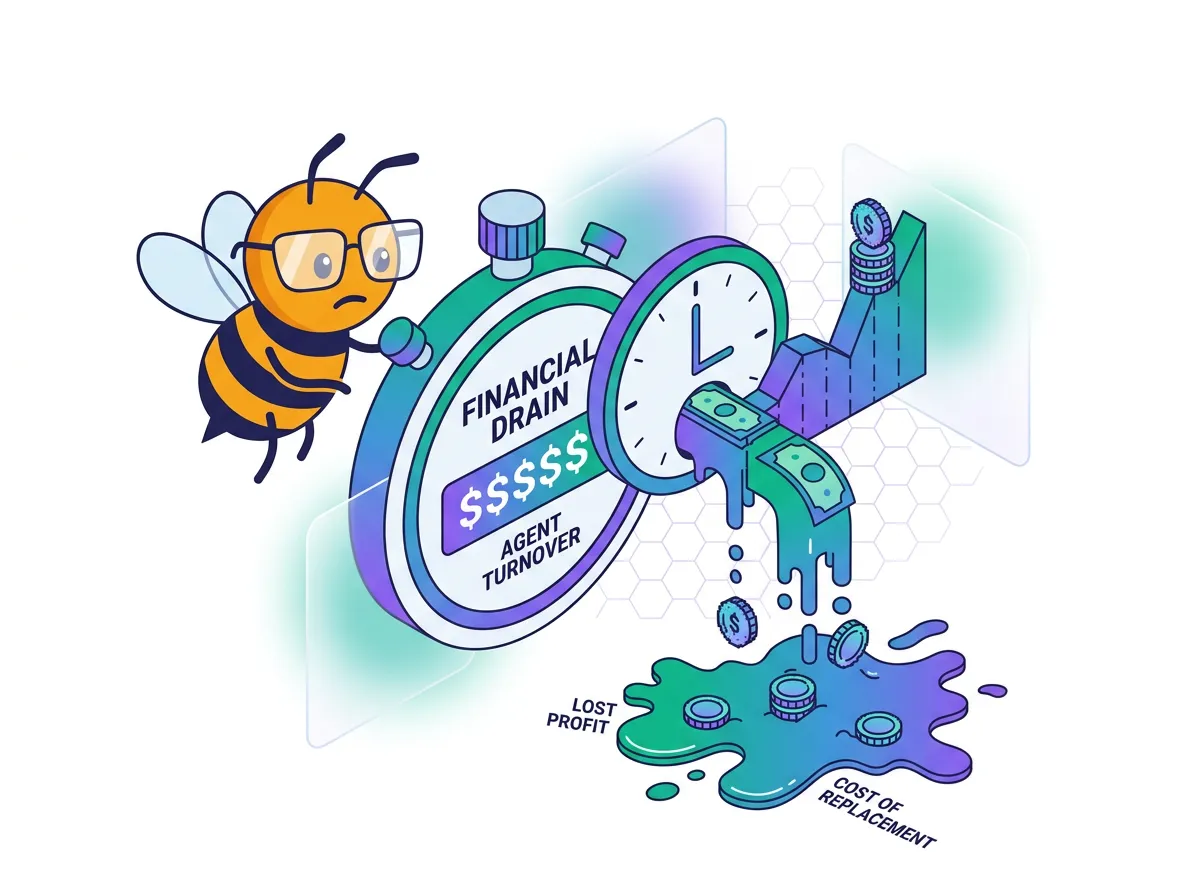
Before you can fix your hiring process, you must quantify the bleeding. Most agency owners drastically underestimate the true cost of a bad hire. They calculate the cost of the job ad and the background check, but they ignore the massive hidden expenses of lost productivity and squandered training time.
Specifically, a 2024 analysis by Forbes revealed that replacing an employee costs 6 to 9 months of their salary (XCEL Solutions, 2024). For insurance agencies, this financial burden is magnified. You are not just paying for recruitment; you are funding licensing fees, compliance training, and months of ramp-up time before an agent writes their first profitable policy.
Furthermore, the broader industry is experiencing a massive spike in departures. Historically, insurance companies operated with an 8-9% staff turnover rate. Today, that number has surged to the 12-15% range, with voluntary turnover for sales positions spiking even higher (Insurance Business Magazine, 2024).
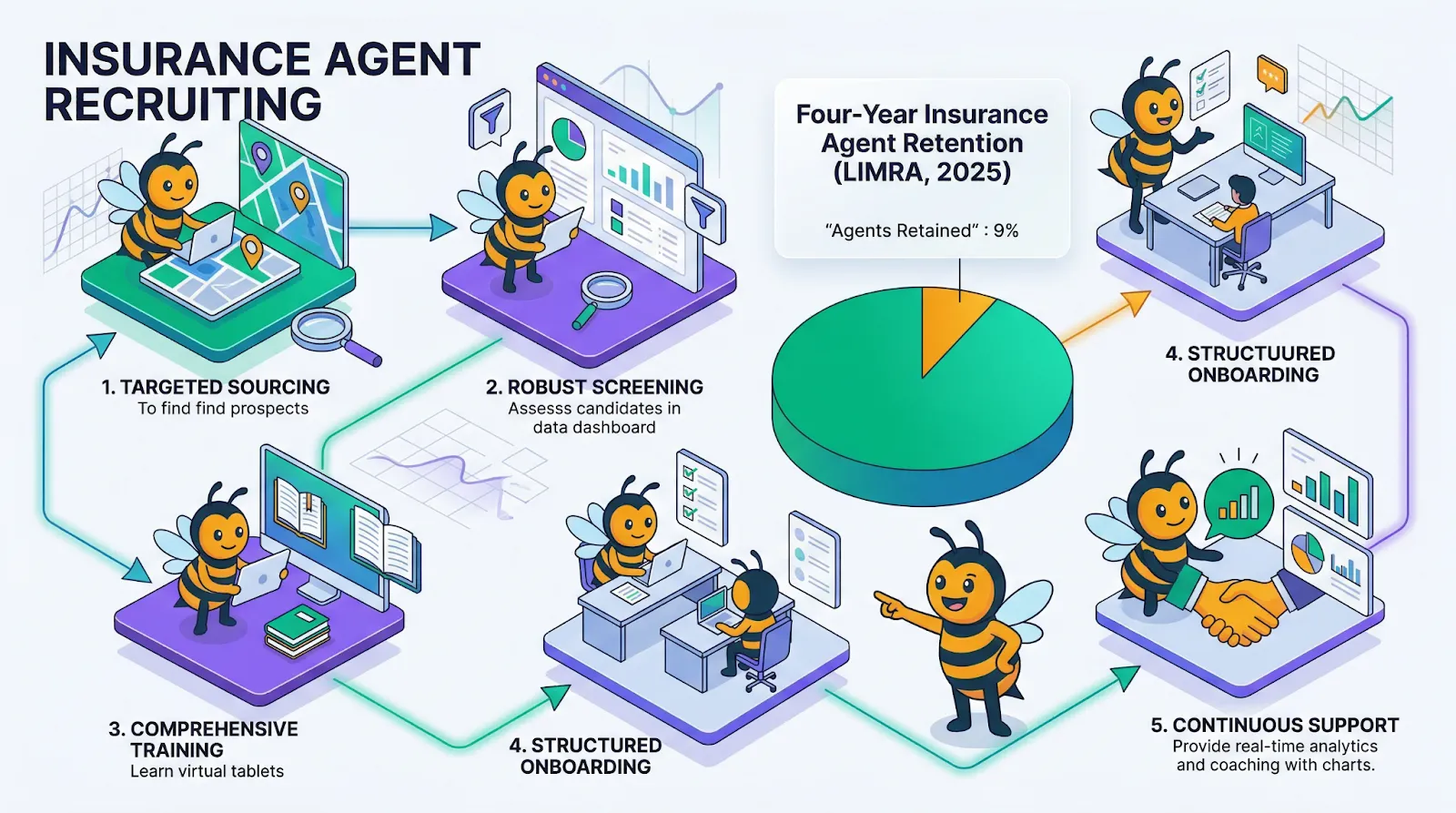
As Chris Taylor, an established insurance strategy leader, notes: "Distributors are struggling with being able to identify the right talent... driven in part by resistance to data-driven recruitment, instead favoring outdated assessments or 'gut' feelings" (InsuranceNewsNet, 2025).
Therefore, relying on "gut instinct" to hire producers is no longer a viable business strategy. It is a proven liability.
Why Legacy Systems Fail Life Insurance Agent Recruiting
During the peak hiring season (April through June), agency HR managers are flooded with thousands of applications. To manage this volume, most rely on a traditional Applicant Tracking System (ATS).
However, a legacy ATS is fundamentally just a digital filing cabinet. It stores resumes, but it does not actively work to secure top talent. When it comes to life insurance agent recruiting, where candidate motivation and resilience are the primary indicators of success, an ATS is completely blind.
The Traditional ATS vs. NurtureMe AI
To understand why modern agencies are migrating to AI, consider this direct comparison:
Demonstrably, traditional methods create a bottleneck. Human recruiters simply cannot call candidates fast enough. As a result, "ghosting"—where candidates abandon the interview process—runs rampant.
Enter AI: The Future of Insurance Agent Recruiting Services
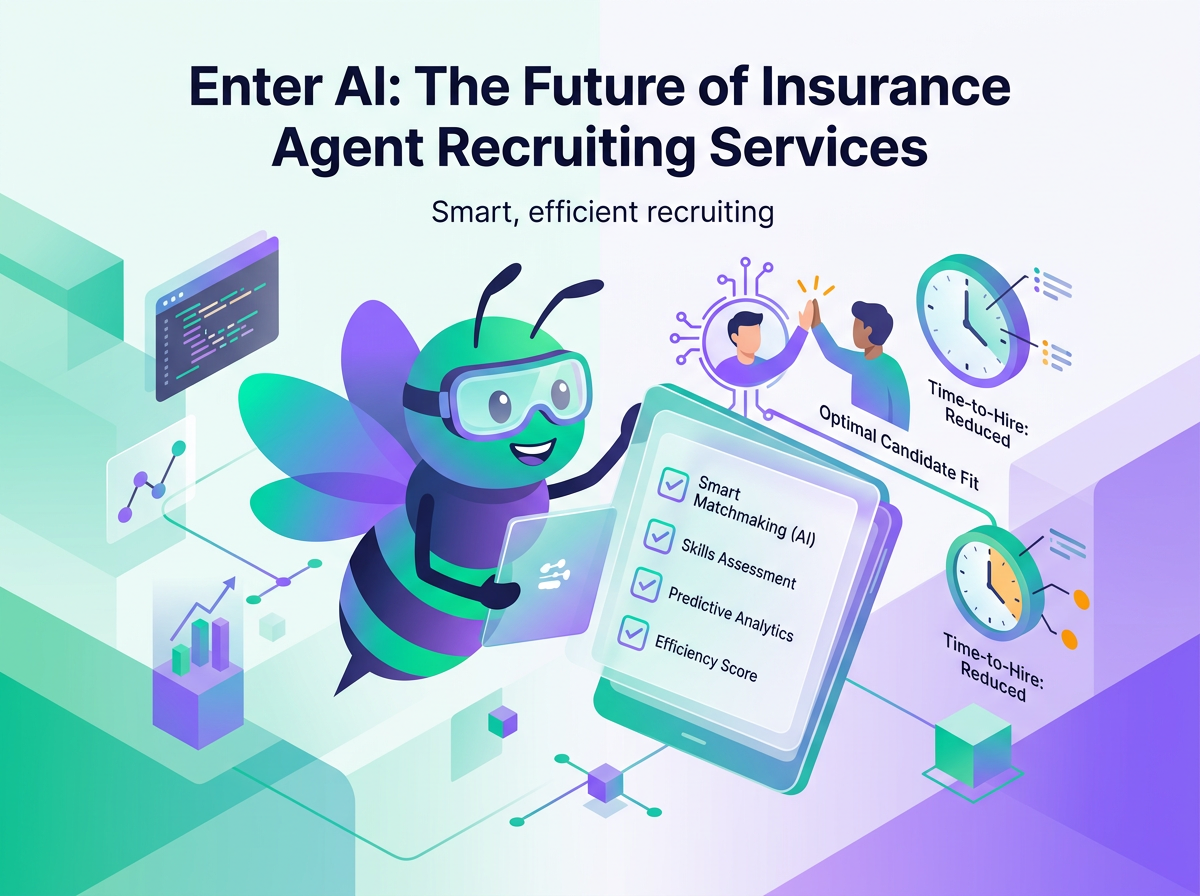
To combat high failure rates and eliminate manual labor, agencies must deploy specialized technology. This is where NurtureMe AI Platform fundamentally changes the economics of hiring.
By utilizing a suite of autonomous AI agents, NurtureMe covers the entire pipeline from candidate discovery to long-term retention.
1. Sourcing Before the Job Board (Friendzy)
The best insurance agents are rarely browsing Indeed. They are passive candidates who need to be engaged creatively. NurtureMe utilizes Programmatic Job Advertising—the automated buying, publishing, and optimizing of job ads using algorithms—through its Friendzy module.
Friendzy Candidate Sourcing finds high-quality candidates using AI targeting and gamification. By engaging potential agents through interactive, gamified assessments before they ever see a traditional job posting, agencies can generate leads for less than $1 per candidate, compared to the $100+ cost of a standard job board post.
2. Instant Resume Screening (Ava)
Once applications flood in, Ava takes over. Ava is an AI resume screener that processes thousands of documents in seconds. She utilizes Natural Language Processing (NLP)—a branch of artificial intelligence that allows computers to understand, interpret, and manipulate human language—to look beyond basic keywords.
Ava evaluates past sales performance, licensing status, and career trajectory. She reads 500 resumes and instantly hands you the exact 10 candidates you should actually spend your valuable time interviewing.
3. Relentless Candidate Outreach (Stella)
Speed is the ultimate competitive advantage in recruiting. If you do not text a qualified candidate within five minutes of their application, your competitor will.
Stella handles all Automated Outreach & Recruiting. She texts and emails candidates 24/7, without ever getting tired or forgetting a follow-up. Stella ensures that top-tier talent is immediately engaged, effectively eliminating candidate ghosting and keeping your pipeline full.
4. Autonomous First-Round Interviews (Mia)
Conducting phone screens for candidates who lack basic communication skills is a massive waste of operational resources. Mia acts as your AI Interviewer & Hiring assistant.
Mia conducts the first-round phone screens using Conversational AI—systems that can simulate human conversation through voice or text. She asks compliance questions, assesses tone, and evaluates basic sales objections. You only meet the candidates who pass Mia's rigorous, unbiased screening.
The Data-Backed ROI of AI Hiring Agents
The adoption of AI in human resources is no longer experimental; it is the industry standard. Agencies that refuse to adapt will demonstrably lose market share to competitors who can hire faster and cheaper.
According to a 2025 Talent Trends survey by the Society for Human Resource Management (SHRM), 51% of organizations now use AI specifically for recruiting, making it the single most common AI application in HR (TechClass, 2025).
The efficiency gains are staggering. A separate 2024 SHRM benchmarking report found that organizations implementing AI scheduling tools reduced their time-to-schedule by 83% and decreased candidate drop-off rates by 28% (ZenHire, 2026).
Furthermore, AI-based screening has been proven to lead to a 75% drop in the cost per candidate screened. For an insurance agency hiring 50 agents a year, this translates to tens of thousands of dollars in immediate operational savings.
Predicting Success and Stopping Turnover
NurtureMe does not stop working once the candidate signs their contract. The platform utilizes Predictive Attrition Modeling—algorithms that analyze historical employee data, engagement metrics, and sales performance to forecast which agents are statistically likely to quit.
By tracking engagement and utilizing leaderboards, NurtureMe alerts HR managers when a top producer is at risk of leaving. This allows leadership to intervene proactively, transforming your retention rate from the industry average of 9% to NurtureMe's proven 90% retention benchmark.
Scaling Your Agency with Confidence
Recruiting insurance agents does not have to be a painful, expensive gamble. The evidence is clear: throwing money at job boards and relying on manual phone calls is a failing strategy.
By deploying NurtureMe's AI agents—Ava, Stella, and Mia—you can automate the tedious top-of-funnel work, ensure strict compliance tracking, and focus your energy on closing deals and growing your agency. With over 40,000+ hires completed and $50M+ in revenue unlocked for our clients, the system is proven to deliver results.
If you are tired of high turnover and ready to scale your team with precision, it is time to upgrade your infrastructure. Designed specifically For Founders & Owners, NurtureMe provides the ultimate competitive advantage in a crowded market.
Stop losing talent to slow manual processes. Embrace the future of hiring today.
Sources & References
- IXP advisor recruitment: Reimagining the cycle — InsuranceNewsNet (2025).
- The Role of Training in Reducing Insurance Agent Turnover — XCEL Solutions / Forbes (2024).
- How AI Gives You a Talent Acquisition Edge — TechClass / SHRM (2025).
- What Is AI Recruitment? — ZenHire / SHRM (2026).
Frequently Asked Questions
How does AI improve life insurance agent recruiting specifically?
Life insurance requires highly resilient, self-motivated individuals. AI improves this process by using predictive analytics and conversational interviews (via our agent, Mia) to screen for behavioral traits and objection-handling skills before human recruiters ever spend time on the phone.
Will AI replace my human HR team?
No. AI agents handle the high-volume, repetitive tasks—like reading 500 resumes, sending text messages, and scheduling calls. This frees your human HR team to focus on high-value activities: building relationships, closing top candidates, and managing agency culture.
How does NurtureMe reduce candidate ghosting?
Ghosting occurs when candidates are left waiting. NurtureMe's outreach agent, Stella, engages candidates instantly via SMS and email the moment they apply. This immediate, 24/7 engagement reduces candidate drop-off rates by up to 28%.
Can NurtureMe integrate with my existing systems?
Yes. NurtureMe is designed to integrate seamlessly with your existing CRM, payroll, and HRIS platforms, ensuring a smooth transition from recruiting to onboarding without data silos.
.png)