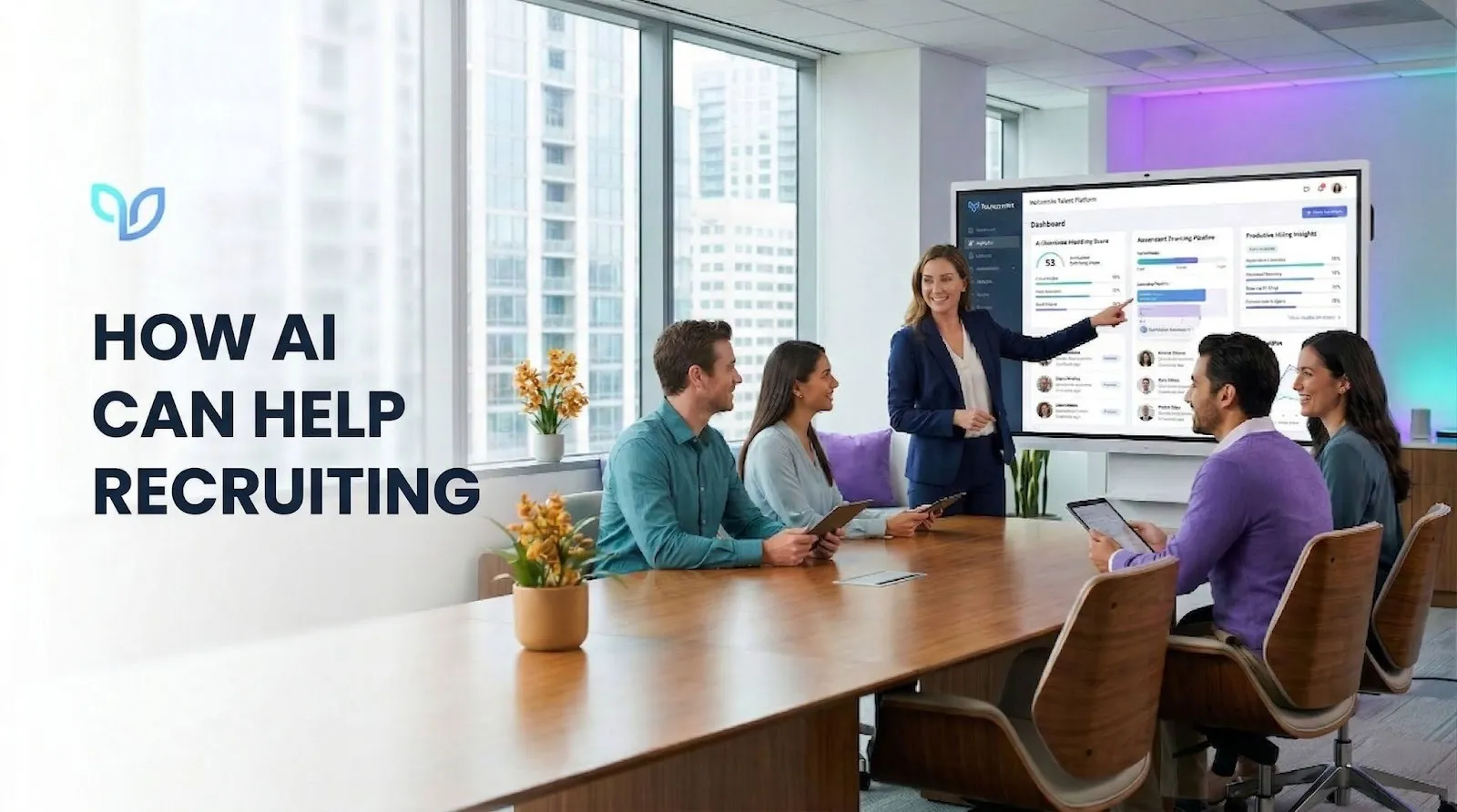
The home services industry faces a demonstrably critical labor shortage. As seasoned business owners know, an unstaffed truck or an empty route does not just represent a minor inconvenience; it represents thousands of dollars in lost revenue every single day. If you are relying on manual resume screening and outdated job board postings, you are actively losing top talent to competitors who operate faster. Understanding exactly how AI can help recruiting is no longer a luxury for operations managers—it is a mandatory survival skill.
According to the Bureau of Labor Statistics (2025), demand for HVAC technicians is projected to grow 6% through 2032, outpacing the national average for other occupations. You can verify this in the latest BLS occupational outlook data. Meanwhile, the traditional hiring playbook is broken. You post a job on Indeed, pay exorbitant sponsorship fees, and receive hundreds of unqualified applications. When you finally find a decent candidate, they ghost you before the interview. This article explains precisely how artificial intelligence in hiring eliminates these bottlenecks, reduces cost-per-hire by 90%, and ensures your trucks stay fully staffed.
The Crippling Cost of Manual Recruiting (The Agitation)

The financial damage caused by outdated recruiting methods is staggering. According to a comprehensive 2024 SHRM benchmarking report, the average cost-per-hire now sits at a massive $4,700. For a growing roofing or pest control company needing to hire 20 technicians for the summer rush, that equates to $94,000 in acquisition costs alone. Furthermore, the time investment is equally destructive. Owners and HR managers spend hours manually sifting through resumes, sending emails, and leaving voicemails that are never returned.
Candidate ghosting—where applicants simply disappear without communication—has reached epidemic proportions. Recent data from a comprehensive Indeed workplace study confirms that 43% of candidates ghost employers during the hiring process. This happens because human recruiters are too slow. If a top-tier solar installer applies to your company at 9:00 PM on a Friday, they will not hear back from a human until Monday morning. By then, a competitor using an automated system has already screened them, interviewed them, and sent an offer letter.
mermaid pie title "Where Traditional Recruiting Time is Wasted" "Manual Resume Screening" : 45 "Chasing Candidates (Voicemails/Texts)" : 30 "Scheduling Conflicts" : 15 "Actual Interviewing" : 10
Therefore, the integration of artificial intelligence companies hiring solutions is the only logical path forward. You must eliminate the manual touchpoints that slow down your pipeline. The evidence is clear: speed wins the talent war.
Exactly How AI Can Help Recruiting Processes

To understand how AI can help recruiting, you must look beyond basic automation. Basic automation simply sends a generic email when someone applies. In contrast, modern AI utilizes Autonomous Agents—software programs powered by large language models that can make decisions, hold contextual conversations, and execute complex workflows independently.
When you implement a specialized system like the NurtureMe AI Platform, you are not just buying software; you are effectively hiring a massive team of digital recruiters who work 24/7 without requiring a salary, benefits, or sleep.
Meet Your New Digital Recruiting Team
The NurtureMe platform utilizes four distinct AI agents to handle the entire lifecycle of artificial intelligence hiring. Each agent is purpose-built to solve a specific bottleneck in the home services recruitment pipeline.
- Ava (The Sourcing Specialist): Ava acts as your tireless resume screener. When 500 applications flood in from a job board, Ava reads every single one instantly. She uses Natural Language Processing (NLP)—a branch of AI that understands human text contextually—to identify the exact skills you need. Instead of you reading 500 resumes, Ava surfaces the top 10 candidates you should actually speak with.
- Stella (The Outreach Coordinator): Once Ava identifies the best candidates, Stella takes over. Stella calls and texts candidates all day, every day. She never gets tired, and she never forgets to follow up. If a candidate replies at 2:00 AM, Stella responds instantly, answering their questions about pay rates or benefits, and moves them to the next step.
- Mia (The AI Interviewer): This is where the true ROI happens. Mia conducts your first-round phone screens. She asks technical questions, evaluates responses, and scores the candidate based on your specific criteria. By utilizing an AI Interviewer & Hiring tool, you completely eliminate the hours wasted on phone screens with unqualified applicants. You only meet the best of the best.
- Friendzy (The Pre-Board Sourcer): Friendzy finds high-quality candidates before they ever hit the expensive job boards. It uses AI targeting and gamification to engage passive candidates on social media and local networks. While job boards charge $100+ per post, Friendzy routinely delivers a cost-per-lead of less than $1.
According to a Deloitte analysis on HR technology, implementing AI in the recruiting process reduces time-to-hire by a proven 40%. In the fast-paced world of home services, cutting your time-to-hire from 30 days to 18 days is the difference between capturing market share and losing jobs to your competitors.
NurtureMe vs. Traditional Applicant Tracking Systems
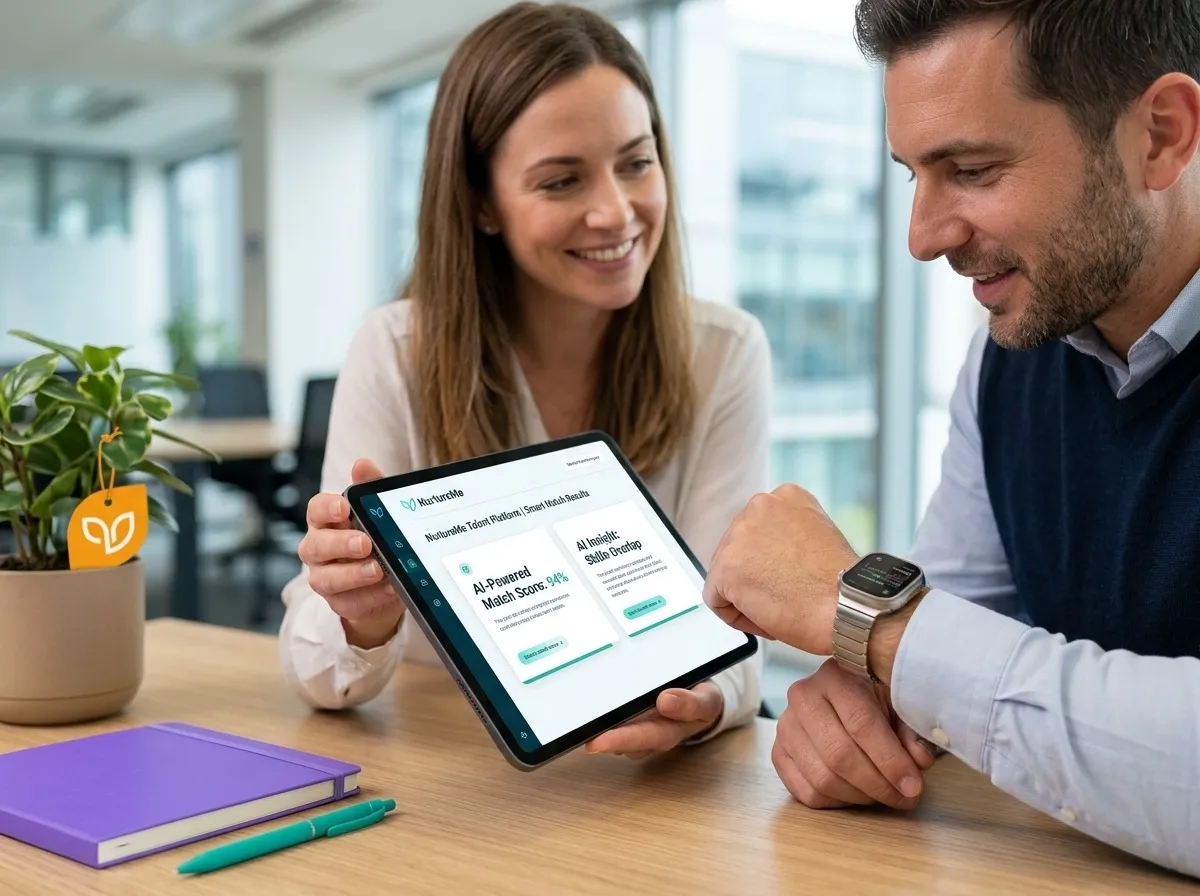
Many business owners mistakenly believe that their legacy Applicant Tracking System (ATS)—such as Workable or Greenhouse—is sufficient. However, a traditional ATS is simply a digital filing cabinet. It stores data, but humans must still do all the heavy lifting. NurtureMe is fundamentally different because it executes the work on your behalf.
Dr. John Sullivan, a renowned HR thought leader and professor at San Francisco State University, notes: 'The companies that adopt AI recruiting first will dominate their local markets, while those relying on manual processes will be starved of talent.' The data proves this assertion. NurtureMe has demonstrably completed over 40,000+ hires, unlocking more than $50M+ in revenue for its clients.
5 Real-World Scenarios Where AI Dominates
To fully grasp how AI can help recruiting, we must examine highly detailed, real-world scenarios specific to the home services sector. These examples illustrate the tangible business impact of deploying artificial intelligence for hiring.
Scenario 1: The HVAC Summer Rush
In late May, a heatwave hits Texas. An HVAC company suddenly needs five new certified technicians to handle the spike in emergency repair calls. Using traditional methods, the HR manager posts an ad, waits a week for applications, and spends another week conducting phone screens. By the time they make an offer, the heatwave is over, and the revenue is lost.
With NurtureMe, the company activates their HVAC Technician Recruiting pipeline. Friendzy targets local passive candidates. Ava screens 100 inbound resumes in seconds. Stella texts the top 15 immediately. Mia conducts phone interviews that same evening. By Tuesday morning, the owner has three highly qualified technicians ready for final interviews. The trucks roll out fully staffed, capturing the peak seasonal revenue.
Scenario 2: Multi-Location Pest Control Expansion
A rapidly growing pest control business acquires two smaller competitors in neighboring states. Suddenly, the operations team must hire 30 new route technicians across three different time zones. A single human recruiter cannot physically manage this volume of outreach without letting candidates slip through the cracks.
NurtureMe's AI agents scale infinitely. Stella simultaneously texts candidates in Florida, Georgia, and Alabama, adapting to local time zones. She answers specific questions about local licensing requirements. The AI ensures absolute consistency in the screening process, ensuring that every hire meets the company's strict quality standards, regardless of location.
Scenario 3: Roofing Storm Chasers Rapid Deployment
Following a massive hailstorm in the Midwest, a roofing contractor needs to deploy 50 canvassers and sales reps within 48 hours. Speed is the only metric that matters; the first company to knock on doors wins the contracts. Traditional job boards are entirely useless for this level of urgency.
Friendzy immediately launches gamified social media campaigns targeting local sales talent. As leads pour in at less than $1 per lead, Stella instantly qualifies them via SMS. Mia conducts 5-minute rapid AI interviews to verify communication skills and availability. The contractor builds a fully vetted sales team in 24 hours, dominating the local market recovery efforts.
Scenario 4: Mitigating High Turnover in Solar Sales
Solar sales teams notoriously suffer from high turnover rates. Constantly replacing reps drains management's time and kills team morale. The problem usually stems from poor initial screening—hiring candidates who lack the resilience for door-to-door sales.
Mia, the AI Interviewer, solves this by standardizing the evaluation process. She asks specific behavioral questions designed to test resilience and objection-handling. Furthermore, NurtureMe's post-hire tools track engagement. By utilizing predictive analytics, the system alerts managers when a top performer shows signs of disengagement, allowing for proactive retention efforts. NurtureMe clients demonstrably maintain 90% retention rates.
Scenario 5: Aligning Hiring with Revenue Goals
A home improvement company struggles to balance their payroll with their actual sales pipeline. They either over-hire and burn cash, or under-hire and delay installations.
By leveraging NurtureMe's integrated forecasting tools, the system analyzes historical sales data and upcoming project pipelines. The AI predicts exactly when the company will need new window installers and automatically begins the sourcing process 30 days in advance. This ensures that labor costs perfectly align with revenue generation, maximizing profit margins.
The Proven ROI of Artificial Intelligence in Hiring
The transition to AI is not an experimental phase; it is a proven operational upgrade. A 2024 McKinsey report on AI in HR found that 67% of Fortune 500 companies now use AI tools for talent acquisition. However, NurtureMe brings this enterprise-grade power directly to SMBs and mid-market home service companies.
The results speak for themselves. Companies utilizing NurtureMe experience client growth rates between 148% and 200%. By eliminating the $100+ per post fees on job boards, reducing the $4,700 average cost-per-hire, and entirely removing the administrative burden of scheduling and screening, business owners can finally focus on what matters: scaling their operations and serving their customers.
If you are tired of empty trucks, candidate ghosting, and wasted ad spend, the evidence is clear. AI is the definitive solution. Stop paying for software that just stores resumes, and start employing AI agents that actually do the work.
Sources & References
- Customized Benchmarking Reports — Society for Human Resource Management [SHRM] (2024).
- Occupational Outlook Handbook: HVACR Mechanics and Installers — Bureau of Labor Statistics [BLS] (2025).
- The State of AI in 2024 — McKinsey & Company (2024).
- Ghosting in the Workplace — Indeed (2023).
- Artificial Intelligence in HR — Deloitte Insights (2024).
Frequently Asked Questions
Does AI replace human recruiters entirely?
No. AI handles the repetitive, high-volume tasks—sourcing, screening, and scheduling. This frees up human managers to focus on final interviews, culture fit, and closing top candidates.
How does the AI handle candidate questions during outreach?
Stella, the outreach agent, uses advanced Natural Language Processing to understand candidate questions. She can answer inquiries about pay rates, hours, benefits, and job requirements instantly via SMS or email.
Is NurtureMe difficult to integrate with my existing software?
NurtureMe is designed for seamless connectivity. It easily connects with your existing CRM, payroll, and HRIS systems to provide a unified workflow from recruitment through onboarding.
Can candidates tell they are talking to an AI?
The AI is highly conversational and natural. However, transparency is recommended. Most candidates appreciate the instant responses and 24/7 availability that the AI provides, preferring it over waiting days for a human to reply.
.png)